Prior to the US government banning (and then reinstating) it, Fable 5 was the newest and most intelligent AI model ever, crushing all benchmarks. Before Fable 5, it was Opus 4.8 in May, then GPT-5.5 in April, and then Opus 4.7 just a few days earlier in April. By the time you read this, a new top model (perhaps GPT-5.6?) will likely outperform the competition.
But what does the latest and greatest AI model actually do for you? I’ve tested every major new AI model for well over a year, and the reality is that they don’t make a meaningful difference for most people. Allow me to break it down for you.
AI Models Are Getting Better at Coding, But Not Much Else
New AI models always offer loads of improvements over their predecessors. For example, Google’s new 3.5 Flash model is faster than ever, and it can spin up AI agents to divvy up work during complex tasks. Fable 5 doesn’t just have agentic tech, but it’s intelligent enough to catch coding mistakes that formerly best-in-class models, such as GPT-5.5 and Opus 4.8, miss. The coding part is key here. Improvements are almost overwhelmingly related to coding. For example, with OpenAI’s announcement of GPT-5.6, the company says its benchmarks highlight “improved agentic capabilities in coding, biology, and cybersecurity” specifically.
It’s also important to keep in mind that AI model benchmarks don’t necessarily translate to real-world performance, even with coding. Besides, the overwhelming majority of people don’t code, let alone dabble in vibe coding. Most people, if they use AI at all, rely on AI chatbots to answer questions, do research, or search the web. If you don’t care about how cleanly an AI can write lines of code, the minimal difference between the best models of today and those from a year or even two prior might surprise you.
For Most Everyday Questions, Older Models Still Hold Up
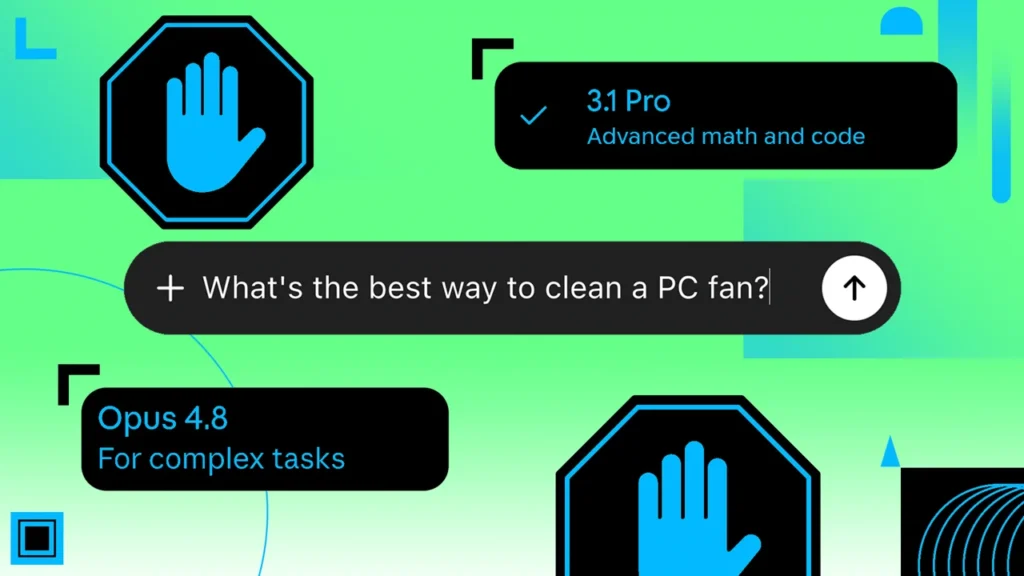
Over a year ago, before GPT-5 launched, I built a PC. During that process, I used GPT-4o for quick answers to a ton of different questions. I asked questions such as whether MSI Afterburner was still the best software for GPU overclocking, what to keep in mind when preparing parts for a water-cooling loop for assembly, and what was the most effective way to clean a PC fan, among other things.
I asked GPT-5.5 Instant the same questions today, and I got the same answers: Yes, Afterburner is still the de facto choice of overclocking software; one should clean watercooling components first with distilled water; and PC fans can be sorted with a can of compressed air, isopropyl alcohol, and a microfiber cloth. You can spend $10,000 on a gaming PC, but if you only use it to browse and stream, it won’t feel much different than a Chromebook. The same goes for AI chatbots and models.
But what about deep research tasks? Looking back over my ChatGPT history, I found a deep research report I generated with GPT-4o about overclocking a Ryzen 7 9800X3D CPU, and I used the same prompt to generate a new report with GPT-5.5. The new report is more focused and works better as a rule-of-thumb guide, but the original included more details on stability testing and voltage tweaking, which are nice to have. Of course, neither is perfect; deep research reports are jumping off points, not definitive sources of truth. I find it difficult to definitively call one out as much better than the other.
This trend continues when I go even further back. For example, Claude still lets you use Opus 3, which came out in March of 2024—over two years ago at the time of writing. I provided the same math questions to both models in the form of a screenshot from a Harvard math class test exam. Opus 3 got five questions wrong, while Opus 4.8 at the highest intelligence settings got two questions wrong. Yes, that’s an improvement, but once again, it’s not a night-and-day difference.
All of the above experiences are anecdotal, but you can run the same tests for yourself, and I expect you will get similar results. When it comes to using an AI chatbot to discuss various topics, the experience doesn’t change all that much with each new model release. Sure, like I saw with Opus 3 to Opus 4.8, big gaps in release dates can result in more substantial differences, but this isn’t the case most of the time.
Paying for AI Models Is More About Access Than Version Number
It almost goes without saying that if a new model is available to you for free, you should use it to your heart’s content. After all, you’re only ever a new account away from more usage if you need it. This holds true for all the mainstream chatbots, including ChatGPT, Claude, and Gemini.
However, that’s not all you need to consider. ChatGPT and Claude, for example, don’t make their complex reasoning models available for free. While the version number might not be that important, as discussed above, going from an everyday-use model (Sonnet, for example) to a complex reasoning model (Opus, for example) can make a major difference; complex reasoning models spend more time thinking about prompts.

Claude’s models all have different properties, but its complex reasoning Opus line excels at tough tasks (Credit: Anthropic)
The good news is that for casual queries that still require reasoning, such as a troublesome math problem, the difference between complex reasoning models is minimal. Whether it’s ChatGPT, Claude, or Gemini, they can all tackle math problems and the like. You could sign up for a premium ChatGPT or Claude plan to use their complex reasoning models, which are more intelligent in many ways, but you can use Gemini’s for free.
If you already pay for a premium chatbot subscription, it’s important to approach your allotted usage efficiently. For example, while you can whack GPT-5.5’s intelligence all the way up from Instant to Extra High, the latter sucks up usage much faster. And Extra High might be overkill, anyway. For example, I sent the same aforementioned math problems to GPT-5.5 Extra High, Medium (its second-lowest intelligence setting), and Instant. With the Extra High and Medium modes active, ChatGPT answered all the questions correctly; with the Instant option, it got just one wrong. The upshot is that you might be able to avoid burning usage allotments on higher intelligence settings that won’t perform any better.
Most importantly, you shouldn’t pay for a chatbot subscription just to use the latest model, unless you really need it. For example, the Sol variant of the recently announced GPT-5.6 is now OpenAI’s most intelligent model, according to benchmarks. But the chances are good that you just won’t be able to make much use of that intelligence.